
Alex Hunt:
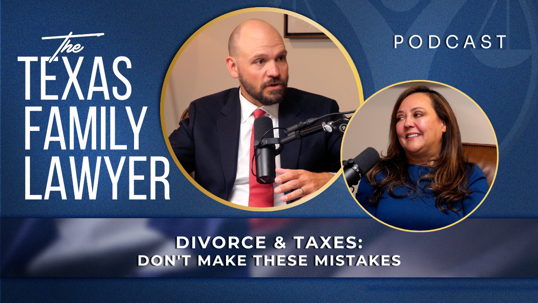
Welcome back to the Texas Family Lawyer Podcast. My name is Alex Hunt. I am managing attorney at Hunt Law Firm serving the greater Houston area. I am very excited today to be joined by Lucy Petri, a tax attorney here in the Houston area. We're going to be talking about all of the questions that you might have that are at the intersection of family law and tax law, and we see these areas intersect all the time. Lucy, thanks so much for joining me.
Lucy Petry:
Thank you, Alex, for having me.
Alex Hunt:
So introduce yourself to the audience a bit. We have worked together on several cases now.
Lucy Petry:
Yes.
Alex Hunt:
Tell me, what's your origin story? Tell us a little bit about your background.
Lucy Petry:
Yeah, so I am dually licensed as a CPA and as an attorney. I have worked in public accounting. I have managed the finances as a controller for a publicly traded corporation. I have been a professor of tax. Basically everything related to tax I have done. I really enjoy taxation. It's like a puzzle to me. I'm originally from Brazil, grew up in Brazil. I speak Portuguese as my first language, but here in Texas I learned Spanish as well, watching Novelis. Yeah, so we work with businesses and individuals on all aspects of taxation, whether it is tax planning, tax resolution, tax litigation, audits, expert witness work. Yeah, everything related to tax.
Alex Hunt:
Well, I could tell you as a family lawyer, most family lawyers know a little bit about tax law, but I especially am very upfront that as a family lawyer, I don't provide tax advice, but when there is a tax liability or tax issues rear their head in divorce, it's wonderful to have a cadre of professionals that you can call on. And whenever there's a tax issue that comes up, you're at the top of the Rolodex. We've worked on several cases together, some pretty complex cases that I wasn't so sure were going to get resolved and you have provided outstanding advice.
Alex Hunt:
So that's why I'm so excited to have you here to talk about some of these issues that I have questions about. I'm sure that viewers will have questions about, but let's dig right in. So commonly we'll see when we have a party that's getting divorced, they might realize for the first time as part of the divorce even that they have a tax liability. So let's say you've got a husband, you've got a wife, they owe tax liability. What do people need to know as they begin the divorce process with that liability on the table?
Lucy Petry:
Yeah. I think the first step, most important step is to know how much do you actually owe? Have all the returns, have they been filed? Are they filed correctly? And do we know what the liabilities are? I don't think you can go into a divorce not knowing if you owe taxes or how much do you owe, because you will not have a proper assessment or understanding of the actual assets and liabilities. You have to know. You have to gather all the documentation. You have to make sure the returns are prepared properly. So I think even before you file, if you have a chance to start gathering those documents, because it may be difficult to obtain later on, as I'm sure you know this better than I do. So it's extremely important that all the documents are gathered, all the documents are researched and all the tax returns are filed and that they are filed properly.
Alex Hunt:
So you would say before you get into divorce, say you've got a client that has done maybe just 2018, they just stopped doing taxes. And I don't judge, but this is a more common situation than you might think.
Lucy Petry:
It is. Yeah.
Alex Hunt:
What would your advice be to them?
Lucy Petry:
Yeah. So I would advise the spouse who is being proactive, maybe being more responsible, to gather the tax documents so they can file separately if necessary. Because you cannot force the other party to file. You cannot force anybody to sign a tax return, but you can file separately and ascertain at least your portion of the liability.
Alex Hunt:
So what guidance would you give to somebody? Say they're a stay-at-home parent and the breadwinner, let's just say it's the husband that's the breadwinner. He has not filed taxes since, say, 2018. There's a stay-at-home parent. They become aware that there haven't been taxes that have been filed, but they haven't really produced any income or maybe it's just marginal. Is there any advice that you would have for them?
Lucy Petry:
That is so frustrating and I see the scenario more than I would like. So for the stay-at-home parent that has the breadwinner who is not cooperating, who is not producing the documents, who is not being forthcoming on the income and you cannot ascertain the income, I would advise them to file separately to protect themselves and report whatever income or no income that they had. Later on, you can file jointly if you can convince the other party if it would be advantageous to them or if the court forces the other party to file. But in the meantime, I would probably file separately to protect and to start the statute of limitations on assessment against that spouse.
Alex Hunt:
And so as a family lawyer, when we are sitting down at the negotiating table, the mediation table, even at the outset of the case where we're just trying to get the lay of the land about what the assets and the liabilities are, it's difficult when you have a situation like that where you don't know what the tax liability is because folks are concerned about it, but I'm not able to tell them what to do about it because we don't even know what the liability is. So is the only way to figure out the tax liability is to actually do the tax returns?
Lucy Petry:
Absolutely.
Alex Hunt:
Okay.
Lucy Petry:
Yes, you have to, because there's so many nuances and so many things that can change in the process of preparation. There could be credits that they're eligible for. There could be exemptions. So all of these veins could actually reduce the tax liability and you won't know until you actually prepare the taxes.
Alex Hunt:
Okay. And let's say that you do owe a tax liability. What are options for parties as they're embarking on their divorce journey? They owe tax liability, what can they do?
Lucy Petry:
Yeah. So the first thing I would look to is the innocent spouse process. Whether or not my client knew of these taxes, benefited from these taxes, whether they filed a joint return, there has to be a joint return, and there has to be an assessment of taxes due to the other spouse not being completely honest. I would look into that and see if my client qualifies. It's usually the wife. Not to be sexist, but it's usually the wife that we ask for the innocent spouse. We have done it for a husband as well. We look to that option to see whether we can make the client exempt from having to pay the taxes. If they do not qualify, then we can look at installment agreements. If they cannot pay, we can look at forgiveness, which is called an offer and compromise. Every situation is different and there are several options that we can explore. It is hardly ever the case that it is decided that it's final and you have to pay these taxes going forward. There are abatements, installment agreements. There are a lot of options.
Alex Hunt:
And is that a negotiation that you would lead on behalf of the client? And can that happen at the same time as the divorce is playing out?
Lucy Petry:
Usually not. Usually that is after the divorce, once the liability is set. During the divorce, if the liability is ascertained, we know how much it is, we know that the parties are responsible. Here in Texas, because it is a community property state, the parties are jointly and severally liable for the taxes, meaning they are each responsible for 100% of the taxes. Anyways say, well, wouldn't that result in them overpaying taxes? No, that means that the IRS, the government can go after either party for the full amount of the tax liability. They usually go after the low-hanging fruit, meaning if one party has a job and a paycheck, that's usually to levy, that's usually to garnish. Whereas if someone is self-employed, it's a bit harder to track down that income. It's a bit more difficult. So the spouse with a paycheck usually gets their wages garnished.
Alex Hunt:
And we'll get situations where we know that there's a tax liability. Let's just use a round number. Let's say they owe $100,000, which is a pretty large amount. And in the final decree of divorce, we talked about this as we were preparing for this. It says one party is going to pay the $100,000. Does that get the other party off the hook if that is signed, sealed, and delivered inside of a final decree of divorce?
Lucy Petry:
Right. Alex, that's why it is so, so, so important for the client to work with a family law attorney who really understands tax law. A lot of attorneys don't know this, but the government will not look to your state final order divorce decree to determine who pays for the taxes. They apply federal law, which supersedes the state law, and they will go after either party independent of what it says on the final order. That's why it is so important to work with an attorney who understands this.
Lucy Petry:
I see this over and over and over where it will say husband will be responsible for the tax liability of $100,000. Well, guess what? The government doesn't care. It's federal law. It supersedes the state. So what ends up happening is the spouse doesn't pay the liability. The IRS goes after the other spouse. I've seen the other spouse end up paying 100% of the liability, even though it says on the divorce decree that the other spouse will be responsible. And now they have to reach out to you to enforce that decree, that final order, and spend more money and maybe be able to collect if you're lucky.
Alex Hunt:
And that's especially dangerous because if you say have $100,000 tax liability, one of the parties is ordered to pay it, usually there's some sort of offset somewhere in the negotiated settlement where if a party is taking on a big liability like the tax liability, then they're probably getting some other asset to offset it. But if then the party that wasn't ordered to pay the liability is the one paying it, you have a very lopsided settlement. And like you said, that's where you really need an attorney that kind of knows the way all of these pieces fit together and what the federal government is willing to do and is able to do. Otherwise, it can become very unfair.
Lucy Petry:
Yeah, exactly. So I advise the responsible, more responsible divorcing spouse to take on paying the liability if you know that they're going to do the right thing and pay, and then adjust the asset allocation. And if the payment can be done in the process of the divorce, even better. But you have to work with a family law attorney who knows and understands this. Otherwise, it can be a disaster.
Alex Hunt:
So let's go back to some of the options that parties would have to pay a tax liability as part of a divorce. The first option that you mentioned was, I believe, a payment plan. This would just look like negotiating with the IRS and figuring out a way to pay the full tax liability, but over time.
Lucy Petry:
Not necessarily.
Alex Hunt:
Okay.
Lucy Petry:
It's not necessarily the full tax liability. If the party cannot pay the liability in full, we may be able to negotiate a partial installment agreement. And it works like this. We would disclose the income and expenses of the individual. We disclose that to the IRS, and there's a calculation. The government allocates what they think is a reasonable amount of money that you should spend on food, education, transportation, housing. And we look at the income and then we deduct those allowances. And based on what is left over, we come up with a monthly installment payment that may be less than what it would be like paying the actual liability, the entire liability.
Alex Hunt:
And then the person that owes a liability, the client, they would have the option whether to accept that payment plan or not?
Lucy Petry:
Absolutely.
Alex Hunt:
Okay.
Lucy Petry:
Also, the IRS has 10 years to collect. It's 10 years from the filing, the date of filing. 10 years to collect the taxes. So if the payment plan, eventual partial payment plan crosses over those 10 years, the liability goes away at year 10.
Alex Hunt:
Oh, okay.
Lucy Petry:
Yeah.
Alex Hunt:
Interesting. And so then the second option you mentioned was an offer in compromise. Tell us about that.
Lucy Petry:
Okay. So an offer in compromise, it's really hard to obtain. You pretty much have to show the government that there's no way that you can pay this liability within the next 10 years. Usually if you're in a fixed limited income or if you have a disability, health issues. Yeah. But the government is very stingy in giving those out, understandably. One more option, and that is something called currently not collectible status. That is a one-year reprieve from paying the taxes. Could be that you are undergoing health treatments or temporary disability or you're without a job or you're just recovering from a divorce. We can explain that to the government, advocate on your behalf and obtain a temporary reprieve from collection of the taxes. And then a year later, it's usually a year. A year later, we can reassess and see if we can ask for more time or maybe an installment agreement or an offer in compromise is an option.
Alex Hunt:
Okay. And then the final option that you mentioned that I want to dig into a little bit, because I think it would be of interest to listeners, is innocent spouse relief. And this is a situation where I see folks have heard of this, but I don't know that they have all the details on it. And I'm curious to get your take on this, but we will get clients. They're the spouse that is not necessarily the breadwinner, and they weren't the ones that had handled the finances during their divorce. And so this is usually the way it plays out. You start the divorce process, they're kind of out of touch with the finances. We start doing discovery, we start learning a little bit more, peeling back the layers of the onion, and we discover there is a huge tax liability or there's just a huge problem that's out there.
Alex Hunt:
There's a tax time bomb ticking and they didn't know anything about it. And a lot of times they'll also say, well, these were a joint return, but I never signed anything. So innocent spouse relief is probably going to be of some interest to somebody that really wasn't involved in the finances, but now has discovered that they potentially are on the hook for could be a large sum of money, tax liability. What is innocent spouse relief and how would you pursue it?
Lucy Petry:
Yeah. So in lay terms, innocent spouse relief is the IRS making it so you're not jointly and severally liable, so you're not responsible for the taxes. It's a little bit difficult to obtain, but if you filed a tax return jointly, you are not aware of the liability, there is an understatement of the taxes usually because of income that wasn't reported or due to fake deductions and credits, the IRS may relieve that spouse, the innocent spouse from having to pay those taxes.
Alex Hunt:
So what do you have to prove? And do you always have to show that the other spouse was completely in the dark? They didn't even sign off on it, like it was a fraudulent signature or are there other ways to prove it?
Lucy Petry:
Right. You have to show that you have lack of knowledge or reason to know. And there's an exception for domestic abuse. If there was domestic abuse, you do not have to show the lack of knowledge. But to show lack of knowledge, we usually show that maybe the spouse didn't have the sophistication. We look to education, the type of work that they do. If they were a stay-at-home spouse who did not have access to the finances. Let me give you two examples on innocent spouse cases that we worked on. One of them, the wife was married to an attorney actually, and he actually cooperated, but he kept a locked office in the house and she had no access. She had no access to the mail. She did not have any education that would assist her in understanding the finances.
Lucy Petry:
Another one was actually very sad because she did not have access to the mailbox. She did not have access to any mail, any finances. And during our... It's heartbreaking actually. During our process of assisting her, she managed to get a couple pieces of mail. She hid it in the vent, Alex. She was that scared. She was that desperate to get ahold of any tax documents that she could. So these spouses obviously had no access to the finances. They had no way of knowing. This is probably an abuse case as well.
Alex Hunt:
Well, if you're hiding things in the vents, it sounds like there's something going on there.
Lucy Petry:
Yeah.
Alex Hunt:
So if you sign, do all of these cases involve a fraudulent signature? I guess what I'm wondering is if you actually did sign on the dotted line on your tax return, is the IRS going to view that as see, you knew what you were doing?
Lucy Petry:
No, no.
Alex Hunt:
Okay.
Lucy Petry:
No, you do not. You could have signed, but still have no understanding and knowledge of the tax documents. So it doesn't have to be a fraudulent signature. And it could be that you signed, but you didn't really understand.
Alex Hunt:
Because we'll get folks that'll say, yes, I did sign, but I had trusted him or her to do the finances. I was trusted to do this other piece of our marriage. I didn't know that he or she was doing that though. So it sounds like there is a solution that if that's the case-
Lucy Petry:
Right. So even if you sign the tax return, you may still be eligible for the innocent spouse process. And we'll analyze it. We'll look, we'll try. We'll try. The worst that can happen is for the government to say no.
Alex Hunt:
Right.
Lucy Petry:
Yeah.
Alex Hunt:
So what kind of evidence do you need in order to prove that there's some sort of domestic abuse or family violence? Do you need a conviction?
Lucy Petry:
No, you do not. You do not. And in one situation, the husband actually wrote a letter and said, "I kept her uninformed on purpose." He actually had used money from her personal trust, which was horrible.
Alex Hunt:
That's helpful. Probably pretty rare.
Lucy Petry:
It's rare.
Alex Hunt:
But that would be helpful.
Lucy Petry:
But we could use testimony from neighbors, families, friends. We could use... You do not have to have a police report. You do not have to have a conviction. We can use circumstantials of evidence or surrounding evidence or testimony to support.
Alex Hunt:
Would that just look like getting affidavits from neighbors and friends?
Lucy Petry:
Yeah, we have used affidavits successfully in the past. And also the client's testimony saying that she endured physical, mental, emotional abuse. So yeah, it's fairly lenient when it comes to that.
Alex Hunt:
Are there any examples you can think of maybe from your practice or just for examples for us of people that would not qualify for innocent spouse relief? Or maybe that you've tried and it didn't meet the burdens that the government set up?
Lucy Petry:
And the education of the spouse really plays a role. Because if you should have known, if you're a person with a certain sophistication that should have known... Also we look to whether you benefited from the income. So in circumstances where the spouse actually received cars, vacations, shopping sprees-
Alex Hunt:
A harder argument to make.
Lucy Petry:
They deny. So one of the elements also would be unfair to hold the other spouse liable. So if you benefited and you had a sophistication or education level, that'd be difficult.
Alex Hunt:
Okay. So let's say that you are a divorcing party and you're now sitting down at the mediation table, you're at the negotiating table. You know that there is a tax liability. Let's say for the purpose of argument, you don't qualify for innocent spouse relief. We've already talked about that. What would your approach be? What would your advice be to folks for their options now to deal with this tax liability?
Lucy Petry:
Okay. So if we establish that innocent spouse is not an option, I would look and see whether the liability can be satisfied during the process of the divorce, whether they're free assets, cash assets that can be used to pay the liability right then and there.
Alex Hunt:
Okay.
Lucy Petry:
Okay? That's one-
Alex Hunt:
So you got $100,000 tax liability, you got $100,000 worth of cash. Your advice most likely is going to be pay it off, wipe it out.
Lucy Petry:
Yeah, because the liability is going to keep accruing interest, and we don't know if the parties are going... Who is responsible enough to pay for it. Okay, that's not an option. Let's say that there are retirement assets and there's no cash. Then I would look to the most responsible party to take on payment, maybe force them to get into an installment agreement with the IRS. That could be a part of the agreement. And if that is not an option for whatever reason and there's still liability left over and that liability is going to be allocated between the spouses, spouses can ask for something called mirroring. And that is basically the separation and allocation of the liability. So the IRS will split the liability and allocate it to each party. This takes time. It cannot be done for the purpose of avoiding taxes. And you have to have filed a joint tax return and you're no longer married.
Alex Hunt:
So that can only happen after the divorce decree is entered.
Lucy Petry:
Correct. Yeah.
Alex Hunt:
And you're literally, again, our example, $100,000 tax liability, you're literally asking the government, just make me responsible for 50-
Lucy Petry:
Correct.
Alex Hunt:
And then my spouse will be responsible for 50. Is it possible to allocate it other than fifty fifty?
Lucy Petry:
No.
Alex Hunt:
They'll only split it down the middle.
Lucy Petry:
Yeah.
Alex Hunt:
And so that would remove the joint and sever liability.
Lucy Petry:
Correct. That's exactly what it's doing. Yeah.
Alex Hunt:
And how common is that? Because I could say as a family lawyer, we could try to work that into an agreement that the parties will cooperate to try to get the account mirrored. But is it common that the government's going to approve that?
Lucy Petry:
No, the IRS doesn't like to do it and it takes time and effort on their part. So it has to be worth it, paying an attorney to do it too.
Alex Hunt:
What burden do you have in order... What evidence is the government looking for to approve a mirroring agreement?
Lucy Petry:
You can just ask, but you have to show that you're not trying to avoid paying taxes, that you're no longer married, that you were joint and severally liable, that you had filed a joint return, that you did not know of the liability. It's basically the same process as asking for the innocent spouse, except that the IRS did not grant your innocent spouse.
Alex Hunt:
You're not getting absolved of it. It's just-
Lucy Petry:
Right.
Alex Hunt:
Okay. So option one, pay it off. Option two, the more responsible party, whomever the parties determine that might be at the negotiating table would be the one to pay it off. Option three, which is tough to get, mirroring. What are the other options?
Lucy Petry:
Yeah. The other options are the installment agreements, the offer in compromise, which is the forgiveness. Yeah.
Alex Hunt:
Okay. And if somebody is, say, awarded a debt or maybe they're fifty fifty and then the government garnishes the wages of one or the other parties, even though the other person was supposed to be responsible for it, then you as the tax attorney are going to be looking to the family lawyer to say you've got to do some sort of enforcement in the family court.
Lucy Petry:
Yeah. Yeah.
Alex Hunt:
And I can tell you, and I know that you know this, you can maybe get an enforcement, you can get a judgment, but Texas has very strict rules about what can be garnished and what's accessible when you are carrying out a judgment. So you might just get a piece of paper-
Lucy Petry:
So frustrating.
Alex Hunt:
And then you've got to go and enforce it and there is a very high exemption limit in terms of the amount of money that you have. You're allowed to have a car and a house and retirement accounts. And if you could figure out a solution before you get to that point, as a family lawyer, figure out that solution because an enforcement and getting a judgment and then enforcing that judgment is not a reasonable solution to figuring out the problem.
Lucy Petry:
Right. And it costs money to do it too. Yeah.
Alex Hunt:
Yeah.
Lucy Petry:
So frustrating. So yeah, if you can make it so it doesn't get to that point, absolutely. And that's why hiring and working with the right team really makes a difference, pays for itself.
Alex Hunt:
What other pitfalls, red flags, or just basic guidance do you think people need to know when they have some sort of tax issue and they're getting divorced?
Lucy Petry:
Here's another instance when it's so important to work with an attorney who has the sophistication and understanding of finances and taxes. Not every asset is treated the same in the division of assets during a divorce. You could be taking on assets that are going to be taxed, potentially taxed at a higher tax rate. If you need access to cash right now, maybe taking on retirement plans is not ideal. Maybe there are other, and I know you and I have worked on puzzles making this work, maybe there are other sources of cash and liquid assets that can be tapped into that are not taxable or that we can equalize between one spouse and another so that the tax burden doesn't fall on all of just one spouse.
Alex Hunt:
Yeah, no, that's a very good point. And a point that I make to clients that have assets and particularly different types of assets is that a dollar in a house is not worth the same as a dollar in a retirement account, and it's not worth the same as a dollar in a savings account.
Lucy Petry:
So true.
Alex Hunt:
Doing that tax impacting work is really important to do at the outset and working with somebody who is attuned to tax knowledge. And then also we work with financial planners as well that can help us do that work. And they work with our clients during the divorce process, and then they also can help them afterwards once they've got everything settled up and create a plan for the future.
Lucy Petry:
I love that.
Alex Hunt:
Yeah. So is there anything else that we didn't talk about that you think folks need to know or that you see in your practice and man, I really wish that people didn't do this or they did do this? Anything we missed?
Lucy Petry:
I think preparing for the divorce, gathering all the documents, filing all the tax returns. I really, really, really, really wish that everybody getting divorced that has a tax problem works with an attorney who understands the taxes because I don't want to see another decree that says one party will be responsible for the taxes and then they come to me because they're not paying and your wages are getting garnished. It breaks my heart every time I see that. So yeah, knowledge is power when it comes to-
Alex Hunt:
Certainly.
Lucy Petry:
Yeah.
Alex Hunt:
Well, Lucy Petry, incredible Houston tax attorney. Thanks so much for joining me. Can you tell folks that are listening or watching where, if they've got a tax issue, where they can find you?
Lucy Petry:
Yeah. But before I go, I just want to say that I have really enjoyed working with you, Alex. And what I really appreciate is watching your compassion and the treatment of your clients was really nice to see that you took on some really technical aspects, but you still carried your compassion throughout the process in working with our clients. So thank you for that.
Alex Hunt:
I really appreciate that. And there's a reason that we work with you and you're very good at what you do and you're very good with our clients and take good care of them.
Lucy Petry:
Okay. Where to find me? Petrylawfirm.com.
Alex Hunt:
Okay.
Lucy Petry:
The office number is 713-859-8000. We're on all the social media. Petry Law is P-E-T-R-Y, and we're easy to find.
Alex Hunt:
All right. Lucy, thanks so much for joining me. My name is Alex Hunt. If you'd like to find Hunt Law Firm, you can find us at familylawyerkaty.com, or you can call us at 832-315-5494. We'll see you next time. Thanks for watching.