
Alex Hunt:
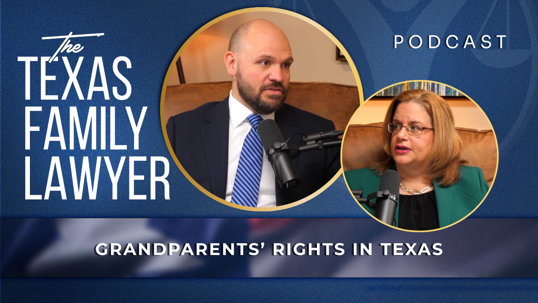
Welcome back to the Texas Family Lawyer Podcast. I'm Alex Hunt of Hunt Law Firm, a family law firm with offices throughout the Greater Houston area. Today I am pleased to be joined by senior attorney at Hunt Law Firm, Margaret Tucker, welcome.
Margaret Tucker:
Thanks for having me.
Alex Hunt:
And today we're going to be discussing the basics of grandparents' rights. How can grandparents get custody in Texas? How can they get time with their grandkids? And we're going to talk about some of the new changes as of the 2025 legislative session in Texas. So, let's jump right in.
Margaret Tucker:
Okay.
Alex Hunt:
All right, Margaret, our first question today is, when can grandparents get custody of their grandkids in Texas? And this is a difficult question and kind of a misnomer, because grandparents really don't have very many rights. There is a very strong parental presumption in the State of Texas, and it starts with a Supreme Court case called Troxel v. Granville. Tell us a little bit about that case, what it stood for, and then how it translates in Texas for grandparents?
Margaret Tucker:
Okay. I think there is a lot of misinformation about grandparent rights. There really are no rights, and that's one of the cases that has come out and said that by the Supreme Court. So, Troxel, the Supreme Court said that essentially biological parents are presumed to be fit, meaning that they are the ones that the court will presume can make decisions for the child, and they make the decisions for the child in the best interest of the child. So, it actually confirmed the fact that biological parents have rights, but grandparents do not.
Alex Hunt:
And in Texas, Texas doesn't have custody. We have what's called conservatorship, because in Texas we like to be just a little bit different, but it's essentially custody as others throughout the United States would know it. And it's incredibly challenging for grandparents. Texas law highly favors parental rights over grandparents' rights. The Troxel case is one aspect of it.
And then just as recently as November of 2025, the voters in Texas enshrined in the Texas constitution that a parent's rights are paramount. That was voted overwhelmingly by the voters. I haven't seen that in practice in our grandparent cases, but I'm sure that it's coming. And so the burden on grandparents getting custody of their grandkids is extraordinarily high. So, a key statute in the Texas Family Code is 102.003, and it allows a grandparent to seek custody under a few different circumstances. And when I say to seek custody, I mean it just allows them to enter the case. It doesn't actually mean they're going to win the case, but it gives them what we call in the legal world standing. Tell me a little bit about standing and what the burden that grandparents face when they're trying to get custody of their grandkids?
Margaret Tucker:
That is the very important part. When you're a grandparent and you're asking the court to give you conservatorship of the grandchild, you first have to have standing in a case. This means that you're allowed to even file into a suit. If you do not have standing, anybody can file a document into court, but the other side can dismiss you from the case, because the court does not have jurisdiction over you. And it's actually, grandparents filing a case, that's what happens a lot of times is if the parents are served in the lawsuit, they will try to throw you out of the case pretty fast, because they want the court to determine if you have standing or not.
So, the first code section is the general standing to sue, and that is the 102.003. And that is not only grandparents, but other people that have care, control, and custody of the child. And you have to have had care, control, and custody in the last six months, for the last six months. And the code section is very specific to say you have to have exclusive care, control, and custody. This has actually gotten a little bit tighter. And what that means is, say you have your daughter living with you and then coming with your daughter are the grandkids. So, if she lives with you, then she's making decisions.
Alex Hunt:
That's not exclusive.
Margaret Tucker:
It's not exclusive. And that's the big hurdle with standing now is that you have to have exclusive care, control, and custody, meaning you are making decisions for the child.
Alex Hunt:
And if your daughter then leaves the home and then leaves the grandkids there, that's when your clock starts.
Margaret Tucker:
Yes.
Alex Hunt:
When you are the exclusive caregiver for that child, you're making decisions, you're enrolling them in school, you're taking them to and from school, and your daughter is absent from their lives, that's when the clock starts.
Margaret Tucker:
Correct.
Alex Hunt:
So, the burden, and if there's one takeaway that people have from this video, this podcast, it would be this phrase, that the grandchild's present living circumstances would significantly impair the child's physical health or emotional development if they are left with the grandparents, that is the burden. It is not what is in the best interest of these grandkids. It's not, "Well, they're living a better life with me, the grandparent, than they would if they were with my son or my daughter." You need to prove to the court that that grandchild is going to be in danger either physically or emotionally if they're with the grandchild's parents. And that's an extremely high burden.
And it doesn't mean that it's impossible. Within the last couple of months we've had two grandparent cases that we've successfully had ruled upon, but just by way of example, the circumstances in those cases were egregious. I mean, the parents were living in squalor. There was failure to thrive. There were situations where the child, infant was being left alone, and the judge felt, "If I don't do something, this child could be seriously injured or could die." Similarly, throughout the years we've had cases where grandparents have said, "It's not fair that I don't get to see my grandchild. My grandchild wants to see me, I want to see them." But there was nothing that was dangerous about the parents. They just made a choice not to have a relationship with them. And unfortunately, for those grandparents, the way the law sits right now with Troxel and with Texas Family Code, there's not a lot of recourse for those grandparents. So, when can grandparents file for custody? And then what does the court consider when determining whether to give those grandparents custody?
Margaret Tucker:
Okay, so, as we already talked about, the general standing to sue is that you've had care, control, and custody, exclusive care, control, and custody of the child for six months. That is the general standing to sue. Also, there is a particular grandparent statute that allows them to file for managing conservator also. And again, there's one thing in filing. You have standing in the case, but then you also have to meet your burden. So, it's kind of two to three prongs that you have to overcome to even ask the court to give you possession and access of the child or conservatorship of the child. And so, they're looking at the parents being able to be fit. And I always tell my clients, the courts are reactive, not proactive. If there is a chance that the parent is going to act in the best interest of the child, the court's going to favor the biological parents.
Alex Hunt:
Absolutely.
Margaret Tucker:
So, unless they have done something to warrant these children being placed with grandparents, the court is going to favor them. The last grandparent case that I had, the parents were tested positive for drugs. And so, that's one of the things that it was a young child and the court doesn't want a child to be placed in danger. And so, they will place the child with the grandparent, but even the cases last for a while too. And if the parents clean up their act and months have gone by and they test that they're negative for drugs, then there's a chance at the end of the case that the court can place the children back with the parents.
Alex Hunt:
Which I found most grandparents want. Most grandparents come to us not because they want to have their grandkids, but they feel that they need to have their grandkids. And 99% of them will say, "I don't want to be dad, I don't want to be mom, I want to be grandma, I want to be grandpa." And so, that's really a best case scenario in most cases where this was the wake-up call that the son or the daughter needed to clean up their act, and then they do have a runway where they can get clean or they can take care of themselves and they can get better.
The other thing that's incredibly important to note, and this is a recent change, is the burden to show that there would be some sort of harm to the physical health or emotional development. It used to be preponderance of the evidence. Preponderance of the evidence burden is like you can show that it's more likely than not that there's going to be some sort of harm to these kids. That's the general civil standard. What we have to prove in a grandparent case is clear and convincing evidence, which is a very high standard. It's just one rung below beyond a reasonable doubt, which is the highest standard that we have under the law, it's the criminal law standard. Very difficult to prove, and you've got to make sure that you've got all of your T's crossed and your I's dot in order to win a grandparent's custody case.
Margaret Tucker:
The thing I would add is, the courts are made up of judges. They feel for grandparents. They do. We have consuls that come into our office, and we all feel for grandparents. It's one thing that you have this great relationship and all of a sudden it ceases for some reason. But the thing you have to remember is, do you have the ability to go in? Are you going to be able to meet standing and are you going to be able to overcome the burden that the parent makes the best decisions for the child in the best interest of the child? It's the fit parent presumption. And so, are you going to be able to overcome it? And I always ask people in my consuls, is there any chance of making amends? Is there any chance that the biological parents will let you see the child? Maybe if you wait a little while, is there a chance? Because if you're going to file a grandparent case, it's probably going to sever the relationship between you and-
Alex Hunt:
Certainly.
Margaret Tucker:
... the biological parents. So, you've got to have the standing and you've got to be able to meet the burden. And so, while everyone feels for grandparents, it doesn't mean you meet those prongs.
Alex Hunt:
And advice that I would have for grandparents that are seeking custody of their grandkids would be to make sure that you have your evidence in line before you come in to speak with the attorneys. But if you need a little bit of guidance, we can certainly provide that to you, but have all of the documentation or know where to go and get it. If you feel that there's some sort of medical neglect, know where the doctors are that can document that. If you see bruises, if you see anything like that, have pictures of that. If you have documentation that the parents are living in squalor or there's food insecurity, take photos of the pantry when you go over. A lot of folks don't realize that you technically can put a child on the stand, but it's so rare and so frowned upon and so damaging to the kid to have to go and be put on the witness stand. And their words typically, unless they're making an outcry of some sort of abuse or neglect can't be entered into the record. So, you've got to get your evidence elsewhere.
You could even bring in conversations that you've had with the parents, or maybe they've admitted that there's food insecurity, or there's drug use, or there's medical neglect, or there's abuse. And all of that is going to be helpful in order to prove your case. And it's important to do that early, because there is a new change recently in the law, and that if you are a non-parent that is trying to seek custody of grandchildren or somebody who's not your child, your biological child, you have to attach an affidavit to your original petition, and you have to prove that there would be some sort of harm to the emotional development or physical health. The judge can kick out the case, they could look at the petition and they can kick it out right at the outset. So, you've got to have that information early on in the case. So, what are some practical steps that you would have for grandparents? What advice would you give them?
Margaret Tucker:
The thing for me is I really do look, kind of what you just said, I really do look at the evidence. When you consult with an attorney, you need to have what you're looking for laid out. There are statutes that allow grandparents to be managing conservators. That means that they're making decisions for the child. They're talking about the health, safety, and welfare of the child. You're talking about school, you're talking about making food for the child every day. You're doing all of those things for the child, so you need to have evidence of that. Then there's other statutes that allow you to just have possession and access. These for me are the harder statutes, because when you're going in and you're just asking to see your grandchild, as emotional as it may be, and as trying for all of us as it may be, unless you have evidence that something ... The physical health or the emotional well-being of that child is an issue, it's a very hard burden.
So again, why are you asking for it? Are you asking to be a managing conservator? Are you asking to be a possessory conservator, which allows you to have possession of the child, but you're also making decisions for them? Or are you asking just for possession and access? Those are the three different ways you can file into court. And why are you asking for each one? And the managing conservator is the harder one to get, because you're making decisions for the child.
And essentially the easiest way to think about a grandparent case is that the grandparents are stepping in the role of parents. You're kind of knocking the parents out. What gives you the right to do that, and why would a court do it? So, you really have to think through what you're asking for and why. And again, if the courts are reactive and not proactive, they're not going to just guess that something could happen to the child. You have to prove that something could happen to the child. Drugs and alcohol, abandonment, just a whole bunch of, like you said before, living conditions for that child. They're not being fed properly, something that puts the child in danger.
Alex Hunt:
And all of those circumstances, it's not impossible to get custody, because we've certainly done it, but it just goes to the point that there are some really exceptional circumstances that need to be ongoing in order for a grandparent to get custody of their grandchild.
Margaret Tucker:
Correct. And just to have the evidence ready to go before you even file. And the longer you have the child in your care, control, and custody, the better. But on the flip side, if a parent walks back in and says, "I want my kid back," now you don't have the exclusive care and control and custody. So, it's kind of a balance of time too. So, there's a lot of burdens to it, but we've had many grandparent cases where we've been very successful with it. So, it's not discouraging grandparents to file suit if they need to, but just know that when they float around the term grandparent rights, there really are no grandparent rights.
Alex Hunt:
And it doesn't hurt to come and do a consultation with us. Tell us your facts, allow us to apply the law to it, and we will give you advice about whether we think you have a reasonable shot.
Margaret Tucker:
Of course.
Alex Hunt:
All right, our next question is, can a grandparent get time with their grandkids through the court? We previously talked about getting custody, conservatorship of the grandkids, but there are provisions in the Texas Family Code where a grandparent under certain circumstances can get possession and access or time with their grandkids. Tell us a little bit about what it takes to prove that to a court and how a grandparent can get time with their grandkids?
Margaret Tucker:
There's two different ways. They can ask to be a possessory conservator, which means that they're asking to have decision-making for the child, but also to get handed some of those decision-making rights, but also to have time with the child. And then there's another code section that allows you just to have possession and access, meaning you just want to see the child. And again, we're all ruled by emotions. All of us feel that every child benefits from grandparents being in their lives. But again, you have a burden to meet. In the one where you're just asking, in the code section that you're just asking for time with your child, there's particular things that maybe your own child, as the grandparent, your own child, the biological mother or father is either in jail, or they have died. And that gives you, again, a leg up for standing.
Alex Hunt:
Very specific circumstances.
Margaret Tucker:
Yes, very specific. And so, just because your daughter has died, it doesn't mean that you just are handed rights to these children and you just get a possession schedule. Again, the court is going to presume that the living parent, or the parent not incarcerated makes the best decisions for the child. So, if they have cut you off as a grandparent, then the court's going to presume when you walk in that day that they have made the best decision for the child. So again, how are you going to overcome the burden to show that the child is not better off without you?
Alex Hunt:
So again, the presumption is that parents act in their children's best interests. The grandparents need to have, even if their child, the grandchild's other parent has passed away or is incarcerated for a long period of time, if grandparents have to come with very strong evidence to overcome that parental presumption that is enshrined in a U.S. Supreme Court case, it is enshrined now in the Texas constitution, it is enshrined in the Texas Family Code. It is not impossible to overcome it, but you need to have all of your evidence lined up really from the get-go. You can't start the case and say, "Well, I'll get the evidence later." You've got to have it ready to go. You need to have it attached to an affidavit per Texas Family Code 102.0031. You need to have an affidavit that is attached to your petition, because if you don't, the court can dismiss your case before you really even get started.
Margaret Tucker:
Right. And if you're filing in court, most likely you're having an issue with the biological parents. So, they're either not agreeing for you to have managing conservator, or they're not agreeing to possession and access. So, you always have to remember, they're probably going to hire an attorney, and the attorney is going to fight the case on the other side. So, you got to remember, you have kind of a battle on your hands. And so, have everything lined up when you go into a consult or hire an attorney to take a case, a grandparent case.
Alex Hunt:
When the court is determining if denial of time with the grandparents would result in a significant impairment to the child's physical health or emotional well-being, what are some of the things that the court will consider?
Margaret Tucker:
That the number one thing is, what is the grandparent adding to the child's life that is a benefit then if the child didn't have that person in their life? It is a very, very high burden, because it's not based on emotion, it's not based on, "Well, they're going to get love from a grandparent." It has nothing to do with that. It's that the grandparent enriches that child's life in some way. Maybe they've been the one to take care of that child for the last five years. And so, to cut them out, the child may have abandonment issues, it would significantly impair their emotional development.
Alex Hunt:
And cause trauma.
Margaret Tucker:
It would cause trauma to that child. So, the court is going to look at the past, what's been going on, how did everybody behave? What are the biological parents doing? What have the grandparents been doing? And they're going to consider all that. But again, the presumption is going to be that the parents make the best decision for the child, so you have to overcome that.
Alex Hunt:
And when a grandparent is seeking time, not necessarily custody, but time with their grandchild, and you have the grandparent's child, the grandchild's parent, when you have them now out of their life, either because they're deceased or they're in prison, I think that the court is going to look at whether that parent was actively involved in the child's life and whether that grandparent was actively involved in that child's life. Whether it was just going for Thanksgiving dinner and Christmas, or whether they were an active participant in the day-to-day life of that child. And sometimes the child's own wishes, particularly if they're older, could potentially play a role for the court. If the child comes to court and they have an in-chambers interview with the judge and they say, "I want to continue to have a relationship," and they can articulate why, I think that the court would take that into consideration. But documenting that substantial past contact is going to be the key to winning the case.
And secondary to that, not only showing, "We've spent more than just Thanksgiving's and Christmases and birthdays together, I was a real part of this child's life," is showing what is it going to look like for that child? And maybe there's already evidence of the abandonment or the trauma that's already starting to rear its head is show what is that going to do to that child? All of that going to be taken into account by the court.
Margaret Tucker:
Sure. And another thing to add is, it's especially difficult in a grandparent case, because if you don't have access to the child when a grandparent is filing for possession and access, it's hard to get to the actual child themself during a case, because they're with the biological parents. So, that sometimes creates an extra hardship in a grandparent case to actually get to the kid to say, "How do you feel about this?" So, it's just another thing to consider when you're moving forward in a grandparent case.
Alex Hunt:
And just as we wrap up this topic, some practical steps for grandparents that are potentially looking to file a case for time with their grandkids, they're going to file a petition under chapter 153 of the family code. They need to attach their supporting affidavit with facts and evidence. They need to be truthful in that affidavit, and they really need to bring it all to that affidavit. They can't hold anything back.
And sometimes filing that affidavit might be the nuclear bomb that just kind of drops on the other parent. And it might mean if there was a possible chance of reconciliation with not their kid, with the grandchild's other parent, that might end it, bringing legal action. And you're going to have to outline all of the things that the person is doing to harm their grandchild. That can be pretty harmful. But if you do decide to move forward with this, gathering that documentation of medical records, communications with the child, therapy records, texts, photos, emails, possible witnesses that could testify into how close the relationship is between that grandparent and that grandchild, all of that is going to be incredibly important. And I would start a journal or a notebook and get all that information together.
And then the last piece of advice would be to as early on as possible, is to consult with a family law attorney. Because while we do have compassion for grandparents, we look at things from a different lens. We have the knowledge of what it takes, and we've done these cases, and we can analyze a grandparent-specific scenario and set of facts. And we can't tell them with 100% certainty what would happen if they went to court. But we can tell them their likelihood of success what some of the weaknesses and what some of the strengths are in their case.
Margaret Tucker:
Sure. And when I have a grandparent consult, I actually do give them the code sections. I tell them, "This is what the burdens are. This is you're standing. We have to meet not only standing, but we have to meet the burdens." And so, maybe if they're in the care, control, and custody of the child, then they have to meet their six months. Now they know to document. So, if they maybe wait a little while, they can collect more evidence or start looking to, as you said, people to testify, those kinds of things. If you know what you are walking into when you file in court as a grandparent, then kind of work backwards and say, "I've lined up everything to give the court everything I have to be part of this child's life." So, one way or the other, whether it's managing conservator or as possessory conservator or just possession and access.
Alex Hunt:
All right, our next question is, there have been quite a few statutory changes in 2025 to grandparents' rights in Texas. And specifically those changes have made it a lot more difficult for grandparents to get time and to get custody with their grandkids. Tell us just a 30,000-foot view of what some of these changes are and what they mean for grandparents that might be trying to get custody of their grandkids in Texas?
Margaret Tucker:
Okay. I would say kind of an overall broad answer is that it was difficult before and they've made it even more difficult. The courts are literally sending, the legislature also is sending the message that you need to understand what you're up against in court, and it is going to be you have to overcome these burdens. I mean, there is no way to go around it. There is no easy solution. I have grandparents that come to me and it's like, "But he's going out at nights, he's drinking. Mom passed away and dad's drinking, and we have the child." But my first question is, "Is he over 21?" "Yes." "Is he allowed to go out drinking?" "Yes." "Were you in charge of the child and did you protect the child and he knew it?" "Yes."
So, the answer is, I mean, he went out when he was allowed to, and he's drinking. So, you've got to ask a lot of questions about what it is that you're presenting. And so, courts are making it more difficult, because if a judge rules and lets a grandparent take a child and gives them conservatorship, it's a possible appeal. And so, courts don't want to be overruled by an appellate court. So, they are going to protect the biological parents and their decision-making powers.
Alex Hunt:
And don't get us wrong, we have sympathy for the grandparents that come in that are emotionally destroyed by not being able to have a relationship with their grandkids, or they feel that their grandkids are in a not great situation. But what I tell my clients is, you can't win, if there is a bad parent on the other side, you need to have a dangerous parent, a parent that is going to inflict physical harm or emotional distress upon that child. And those are two very different things.
Margaret Tucker:
I mean, drugs is a great example of a way that a court would look at that and say, "The child's in danger. This is not okay. This is a little infant and somebody on drugs cannot take care of this child." And so, they're just tighter. And so, they're watching who is able to get custody or possession of a child beyond the biological parents.
Alex Hunt:
Let's go specifically through some of the changes. The first one is 102, Texas Family Code 102.0031. This requires one additional step when you're filing a petition for grandparent custody, specifically you have to file an affidavit. Tell me a little bit about that affidavit, what it involves and what needs to go into it?
Margaret Tucker:
Okay. Whenever I do an affidavit for a client, I always tell them, "When you put words down for a court, everything needs to be 100%. It needs to be completely correct, completely proper. We need to put everything we have into this affidavit." So, you're laying it out for the court. The good news is, when you do an affidavit you don't have to worry as much about hearsay and other objections coming into that. So, you're able to say, "The child said, this person said," so it gives you a little leg up in the fact that you're able to put those kind of things in an affidavit that you might not be able to get into testimony in a court. And so, you're able to do all that. But on the flip side, you've got to lay it out for the court, so everything needs to be put in there.
We talked about how much time you spend with the child? Are you making decisions for the child? Are you going to the schools? Are you doing doctor's appointments? Are you making decisions for this child? Or if it's possession and access, what time did you spend with the child? Did you live with the family? Did they live with you and that you saw the kids on a daily basis? And why the child needs you in that world? What is going to affect their emotional development if you're not in their world? You need to lay it out, be very, very clear. And it's got to be very convincing.
Alex Hunt:
And what the danger is to that grandchild, because you need to overcome the parental presumption, and you really need to do it in that affidavit. Because if you don't do that, the court could dismiss your case at the very outset before you even really get started. And before you're able to put witnesses in front of the judge and all that, you need to prove kind of a prima facie case in the affidavit that you can be successful if you prove all the things in that affidavit.
Margaret Tucker:
Correct.
Alex Hunt:
The other changes occur in section 102, which is the general standing statute. And tell us a little bit about some of the changes that would affect grandparents in standing, which is how a grandparent can even get into the case? Not necessarily win the case, but just allows them to get into the case.
Margaret Tucker:
Okay. And 102.003 is the general standing to sue. So, this is the standing for pretty much anybody who has had care, control, and custody of the child. So, it's not just grandparents. So, this one's the, I will use the term easier code section to go in under, but when I use the word easy, that doesn't mean it's an easy statute to get into a court, but it is the easier one to use. But they have now added the word exclusive. And so, in the past if a grandparent was around a lot and maybe they lived with them, those kind of things. But now you have to be the decision-maker for the child for six months. I mean, you have to be the one that mom and dad are not in the picture. They're not making decisions for that child, you are.
So, it is very limiting into filing under this code section. So, if you have it, then that does get you in. And so, you have to prove to the court. Again, we talk about how to prove it, get your evidence. You've been buying clothes for the child off Amazon for six months. You've been going to the doctor, you've been emailing with their school. Those kind of things are evidence to show that you've had that exclusive care, control, and custody for six months.
Alex Hunt:
And you still have to file the affidavit and you need to prove the same things. And then in order to win the case, you still have to prove your case, but that allows you to get in the door.
Margaret Tucker:
Yes.
Alex Hunt:
Texas Family Code chapter 153 outlines how a grandparent can get custody of their grandkids. And there were some major changes there, particularly 153.002, if anybody's out there and wanted to look it up. That specifically says that increase the burden to clear and convincing evidence. Used to be preponderance of the evidence for a grandparent to have to show that the parent was not a fit parent. It's now clear and convincing evidence, which is just a rung below beyond a reasonable doubt, which is the highest burden. It's the criminal statute, criminal standard, and it's a very high burden. You've really got to bring your A game. You've got to bring all of your evidence, and you've got to prove by clear and convincing evidence that the court denying the relief that the grandparent is seeking would significantly impair the physical health or emotional development of that child. And you've got to bring doctor's notes, you've got to bring therapy records, you've got to bring texts and pictures, and you really can't rely on just the words of the parties, you've got to bring quite a bit.
Margaret Tucker:
And I mean, it's always to remember that if you're up against a biological parent, they're likely going to have an attorney, and they're likely going to fight back. So, that's why the burden is so high. And so, clear and convincing evidence is that without any doubt you need to place this child with a grandparent. Over the wishes of the parent, the biological parent. Over them making decisions for them. This grandparent is the one that the child should be placed with.
Alex Hunt:
And we've really hammered home the point that this is going to be a difficult thing to prove. It's a high burden. Does not mean that it's impossible though. And like I mentioned, just this year we've had several successes where we've gotten grandparents their grandchildren, and we proved the case. And we had numerous, numerous exhibits to bring home the point that this child would be endangered if he stayed with the parents. And it's an unfortunate situation. But the judges, if they get the evidence in front of them and they truly believe that this child's going to be in danger if he stays with the parents or she stays with the parents, then most of the time they're going to do the right thing and they're going to make sure that this child is protected.
So, those are just a few of the family law code changes that have occurred. And then the overarching change has been to the Texas constitution, which gets changed a lot more than the U.S. constitution, quite a bit. But the big change there was that they enshrined in the Texas Constitution that parents are the paramount decision-makers for their kids. And we haven't seen that play out in practice, but I imagine that we will soon. And that would certainly, if we were defending a parent against a grandparent trying to get custody of the kids, I'm sure that that's something that we would rely on. So, all of these changes we'll see play out in practice. And very important.
Margaret Tucker:
It is very important. And everybody does feel for grandparents, and it's a very emotional issue. And so, it's best to step back and look at it from a court's perspective and try to take the emotion out and look at it with evidence and look at it with code sections. And do you have standing? Do you meet the burden? Do you have evidence? And kind of look at it in a clinical way, because we all feel for grandparents, but it doesn't equate getting possession or access, and it doesn't equate getting conservatorship.
Alex Hunt:
Well, Margaret, thank you so much for helping us break down the basics of grandparents' rights in Texas. And if anybody out there is looking for some family law assistance, we have offices in Katy, Cypress, Sugar Land, League City. Hunt Law Firm, we're here to help. You could find us online at familylawyerkaty.com. Please subscribe to the podcast, like this post, go on YouTube. We have plenty more videos where this is. Go to our website, look at our resources page. We're here to help. Thanks so much, Margaret. See you next time.